The Stories We Can’t Help Telling
Having pieced together my first draft, it’s allowed me to take a step back. I’ve been completely immersed in my characters, pacing and scenes to the extent that I haven’t afforded myself the opportunity to fully come to terms with the concept of the story itself.
I’ve been asked numerous times; “Where did you get the idea?”
The better question to ask would be; “Why did that idea stay with you?”
The inception of the plot was a bit of a realisation of an exciting concept that would fit really nicely into a world that I would find intriguing to build. That premise essentially lies at the crux of my thinking for every aspect of this book; is it intriguing and interesting to me? That first idea was then allowed time to breathe, over a period of months, to develop a life of its own. My mind kept coming back to it day after day; constantly building upon a skeleton foundation until it became the template for my planning ahead of the first draft.
I’ve had hundreds of ideas for stories or flash fiction. Most dissipate into the ether yet some remain strong enough to hang around. They refuse to leave, constantly nagging at the edge of your mind to be brought to life.
Far more experienced authors than I have spoken before about how they don’t necessarily choose a story but rather the story chooses them. Without wishing to sound like Ollivander, after this process I now genuinely understand what that means.
There are a series of concepts and themes that underpin my manuscript but what truly sits at the cornerstone of this story are deeper questions around morality, trust, loyalty and belonging. It is questions such as these that have created such an anchor to this story in a way that wouldn’t allow it to leave me until I found a way to bring it to life.
As I look back through my favourite books, films and music, I can see similar themes underpinning the majority of those stories that I consider to be my favourites. The themes resonate with me in a way that few others can. In many ways, I think the same emotional questions have been prevalent in many of the writing pieces I have put together, they’ve simply been disguised in different contexts.
In many ways, whilst I was under the illusion that I was writing a novel, it was really the novel that was revealing what truly interested me.
For this particular idea, I think the inception came back at the start of 2024, without me truly understanding it.
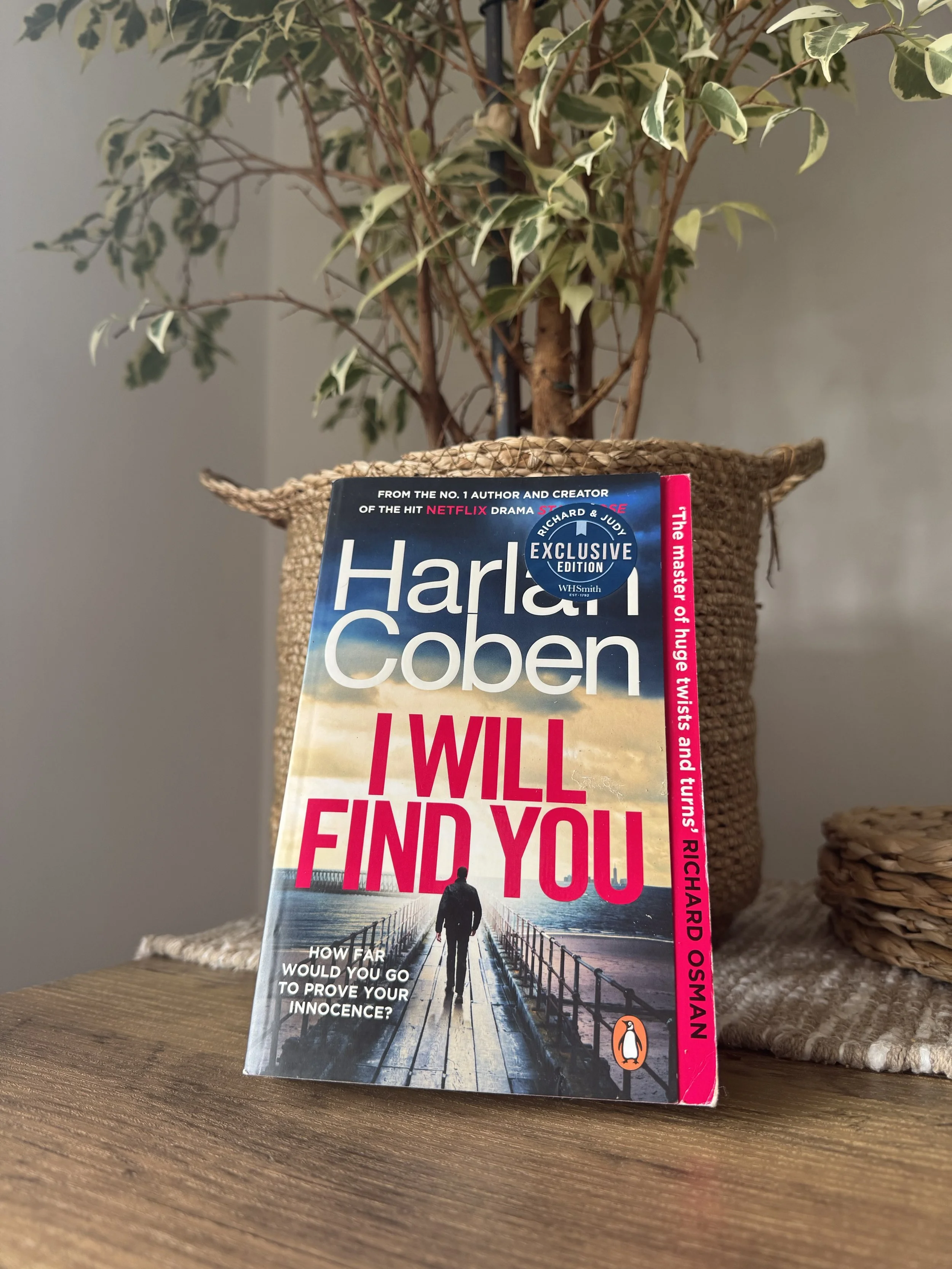
At the Olympic Qualifiers in Oman, I was reading Harlan Coben’s I Will Find You, which has coincidentally been recently turned into a smash-hit TV adaptation on Netflix.
Whilst the pacing and action had me hooked, the concept and the reveals as the story developed sat with me long after I’d finished.
There was an underlying question within the novel that sat with me, unnoticed, for months and in many ways became a central tenet in the formation of my own story. This same premise is true for a multitude of Harlan Coben novels, becoming a primary reason why I remain such an avid fan of his work.
What would happen if your entire world had been created on a foundation of lies? When that lie can remain hidden and influence so many other factors, there’s a perfect cocktail of drama that can be manipulated in a plethora of contexts.
If one simple decision can lead to a different path being taken in life, then it doesn’t take long before a spider-web of possible routes can be mapped out before any number of characters; creating a myriad of opportunities for suspense, drama and intrigue to swathe over those at the heart of your story. The subsequent questions that arise from the insecurities and doubt that cloud every thought can layer emotions into an actionable stance that can influence every possible character.
Over time, my understanding and appreciation of techniques and storytelling have developed to manufacture a style that I feel that my story deserves.
Claire Douglas’ ability to intertwine different timelines in a way that slowly peels back the true motives and intentions to the reader is a skill that few can replicate yet would have a substantial impact on my story in particular. Adopting subtle techniques and ideas into the practical application of my storytelling has hopefully given my manuscript the oxygen it needs to be brought to life in a way that does justice to the connection I have with the deeper meaning behind its’ plot.
Piecing together this story has revealed more about my interests and what hooks me into a story than I had ever imagined. Whilst it started as an opportunity to enjoy what I write, it very quickly became much deeper than that.
As I’ve built on the style in which I can convey this, the deeper questions are what have truly bound me to this story. Over time I’ve realised that this is what the story truly holds over me. It’s a means of conveying matters that truly intrigue me.
It’s my own desire to explore these concepts, within the context of this plot line, that resulted in this particular story ‘staying around’ to be chosen. Not me simply ‘getting an idea’.
As I was writing, I had a potential skeleton outline for a sequel beginning to form in my mind. When I begin to dismantle the central premise and the events that the protagonists encounter, there’s an underlying link to some of the very same themes.
So maybe it’s an idea that comes to me in a moment that is allowed to grow. In reality, I view the idea as a vehicle through which I can explore themes and quandaries that intrigue me and that is the true foundation of the excitement that I get from my writing.
Embracing that journey has given an intrigue to my work that I admit that I didn’t think I would find. It has created an opportunity to analyse deeper concepts than will be evident on the blurb and, without wishing to be too philosophical about the idea, that level of critical thinking has been engaging in a way that I’ve not truly experienced in a very long time.
So there never really was a ‘eureka moment’ with the idea for my manuscript. What started as a trivial question began to grow and grow into something far deeper than I had imagined. The inception of the question to the finished idea took months of editing to the point that it was barely recognisable from its’ early iterations.
The central premise hooked me in a way that refused to let me leave its’ side. It lured me back in time and time again until I felt like I had no choice but to write it.
Writing was simply the vehicle through which I could explore these concepts and that’s a prospect that gives me an immense amount of freedom. After all, I’ve spoken about it being the purest form of creativity.
So what better way is there of exploring it?!
Writing didn’t give me something to say, it just gave me a better way of saying it.