Throughout the journey of this blog, I’ve been conscious of the progression of topics.
From Pitch to Page gave an oversight as to why I started.
Structure v Freedom gave an insight into how I create within this new world.
Listening for Language provided an overview of where some of my ideas come from and the inspiration I carried through from my youth.
When Momentum Changes Shape outlined the very real impact on the measurements of success I have utilised across my sporting and writing careers.
The Draft That Changed Its Author opened the door on my feelings upon finishing my first draft and stepping into the unknown world of editing.
The Stories We Can’t Help Telling explained my perception on why certain stories stay with us.
I’m very conscious of my space within an already densely populated medium in the world of literature. To suddenly turn my attention to preaching on the mechanics of writing as a new-found guru in the space would be condescending to those of you taking the time to read this and lack any form of genuine honesty on my part.
This is a personal journey into this realm and therefore what I choose to share is exactly that; personal. It’s a highly contextual perception of some of the practicalities of choosing to spend my time exploring the world of literature from a different perspective. If people can relate to this or find a small amount of solace from engaging with these ideas then that just affirms my beliefs regarding what I’m doing.
My previous post gave credence to the idea that certain stories stay with us through a deep connection to the matters that intrigue us most. So often, these stories can be created from the smallest of moments and this is what I want to explore in this post.
Contrary to popular opinion, I don’t believe that writers see more. I feel like this is a cliche too readily banded about to account for some of the incredible concepts outlined throughout the history of literature.
My belief is that writers spend longer looking. They sit a little longer with a thought. They challenge more of what they see and allow that concept to be explored from any manner of angle until it can be extrapolated no further.
Throughout my sporting career, I have been taught to observe performance in the form of positioning, timing and movements. The higher I’ve reached in the game, the more prescriptive these moments are. The structure with which teams play becomes far more prescriptive purely on the basis of there being less room for error due to the quality of players you are competing against.
But there’s a fine line with this. Behaviours can become dangerous when they become predictable. Profiling individuals can give a key edge at a level where games are decided by the smallest of margins.
I’ve made actions in international games based entirely upon an assumption I’ve made on the behaviour of a player in a certain scenario. There can be no definitive evidence to support it other than developing a theory based on predicting behaviours within a context. I’ve learned to ask how and why in a way that allows a profile to be built that can hopefully be exploited. Sometimes it works. Sometimes it doesn’t. That’s sport.
Within writing, profiling a character, plotline or trope can carry the same weight. I’ve seen the value in noticing hesitation, silence, contradiction and emotion. From there, having the ability to ask why opens doors in a way that can quickly be exploited in any manner of ways. A behaviour trait can be deciphered from any manner of action or inaction. A subsequent profile can be rendered from the most innocuous of moments.
Ultimately, that’s one of the biggest differences that I have encountered.
It’s the ability to identify an ordinary moment and question why. From there, allowing the theories to writhe around until one stands tall, grabs you by the scruff of your shirt and refuses to let you go.
In Winter, I went to visit my wife in London. In doing so, I found myself crossing London Bridge in the midst of rush hour. It didn’t take long until I found myself people watching. A thousand different lives and a thousand different stories, each jostling for my attention in the setting of a crisp clear night above the Thames.
By the time I crossed the bridge, I had the outline for a Flash Fiction piece that could easily become a foundation block for something far greater. I wrote it the following day.
It’s the same observation skills that I’ve always utilised within sport, it’s just in a different language.
The skill isn’t really the imagination, it’s the attention. It’s staying with the idea long enough for it to be explored in a meaningful way.
The truth is that nothing extraordinary happened in the slightest. I simply crossed from one side of the bridge to another with a compulsory Gail’s coffee in my hand. I just couldn’t stop thinking about that crossing and the possible ramifications of a chance moment in the crowd until I could get it down on paper in under 500 words.
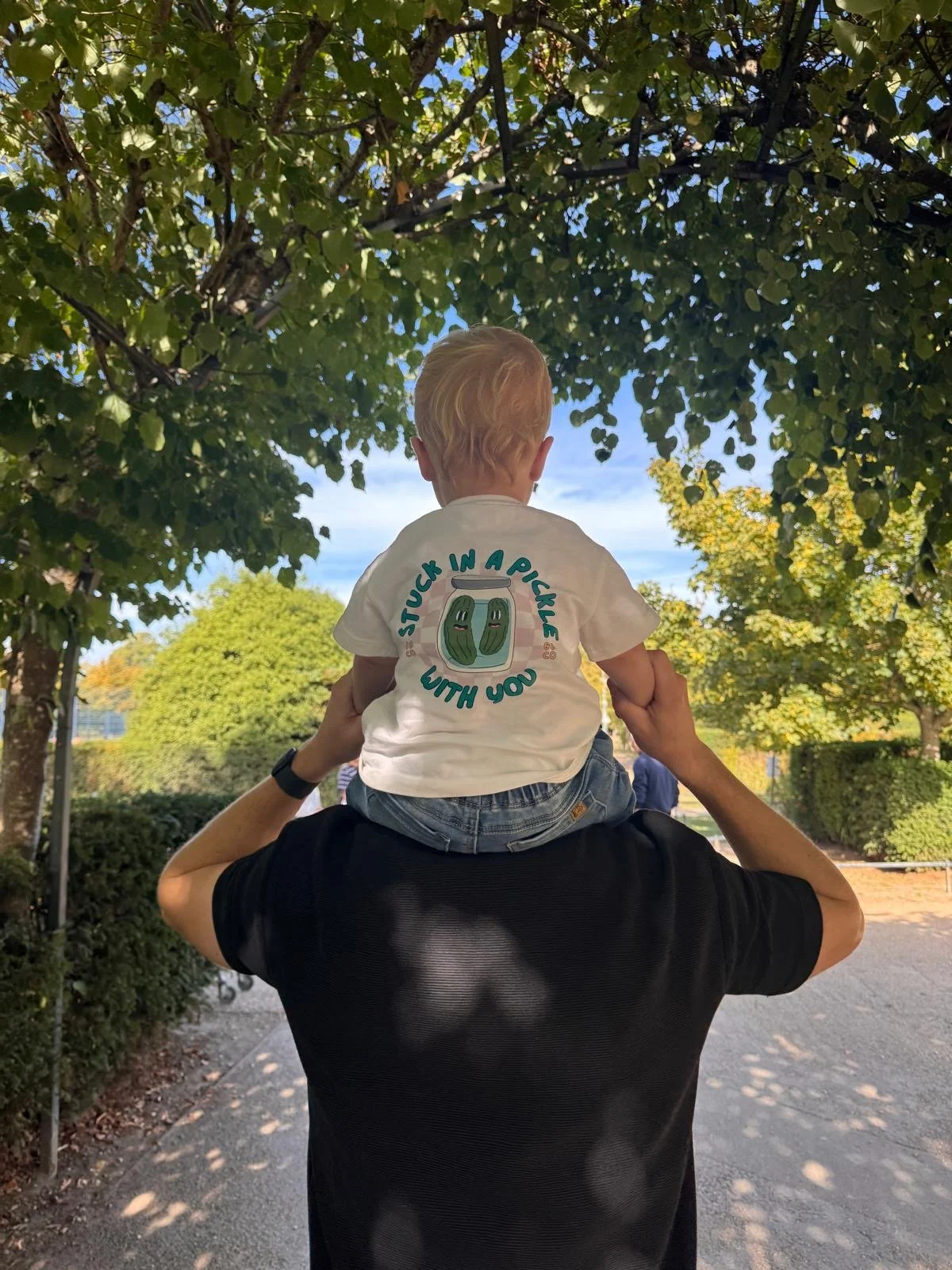
Fatherhood has undoubtedly changed the scale of my observation. Every small moment becomes far more meaningful. It’s laced in emotion on a scale that is difficult to convey in a way that actually would do it justice. The tiny things become significant and routine becomes meaningful. Becoming a father didn’t just change my priorities, it changed what truly captures my attention.
There is an extract from ‘Out of your mind’ by Alan Watts where he outlines the premise of the ‘Dream of Life’. The concept is that if you had the ability to dream a full 75 years of life, you find yourself constantly pushing the barriers of what is possible to you. You would, if you so could, dream any multiplicity of choices available to you when dreaming that life that you would like to live. You would become more and more adventurous in your choices in the knowledge that you were safe within your dream whilst living out your 75 years of life.
Ultimately, within the confines of possibility, the theory outlined is that you would find yourself, at some point, dreaming of the life you’re living right now.
I don’t doubt that I have probably completed the infinite choices available to my son when thinking about his future. You can’t help but to wonder and piece together all manner of possibilities that may be available to him depending on his passions and interests.
This same concept can be applied to any number of theories from my novel. It was, after all, built on a series of small moments and dozens of observations collected over time. The story emerged simply because I kept paying attention for long enough that the storylines began to form.
Any number of interactions or moments can carry ramifications far greater than could possibly be conceived in a moment. A plethora of contexts can provide the platform for which a route can be traversed.
Writing hasn’t made me more imaginative, it has simply made me more curious. Curiosity has become an intriguing way of moving through day to day life and one that has opened doors to endless possibilities as a result.
I would challenge anyone to take a moment to study the simplest interaction and question why.
Once you’ve produced an answer, sit back, and allow the theories to flourish.